
Summary: Interlocking driveways, asphalt, and concrete each perform differently in Toronto's climate, so the right choice depends on budget, curb appeal, maintenance tolerance, drainage needs, and future plans rather than upfront price alone. Homeowners should evaluate installation quality and long-term flexibility before deciding which surface suits their property.
A professionally built interlocking driveway in Toronto offers a different value proposition than asphalt or concrete. It usually costs more upfront, but it can provide stronger design flexibility, easier spot repairs, and a more customized finished look. The best choice depends on what the homeowner expects from the driveway over time.
Compare the Upfront Cost
Asphalt is often the lowest initial-cost option, while concrete and interlocking pavers usually sit higher depending on site conditions and finishes. Interlocking costs are influenced by excavation, base preparation, paver choice, borders, drainage, and pattern complexity. Comparing price without comparing scope can be misleading.
A driveway quote should explain what is included beneath the surface. Base depth, disposal, compaction, edge restraints, and grading all affect performance. A lower upfront price may be reasonable, but only if the homeowner understands what is being purchased.
| Material | Upfront Cost | Design Flexibility | Repair Ease |
|---|---|---|---|
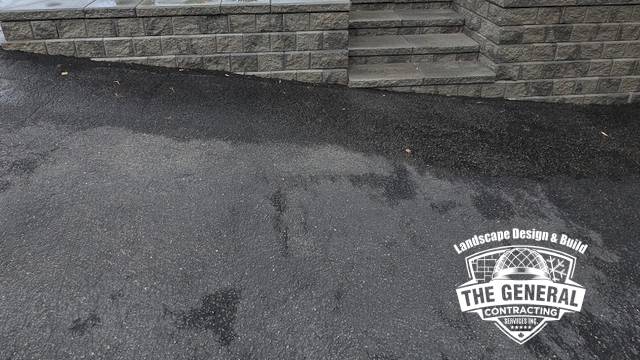
| Asphalt | Lowest initial cost | Clean simple look | Patches can be visible |
| Concrete | Higher than asphalt | Plain to decorative | Cracks can be visible |
| Interlocking | Usually highest upfront | Most design flexibility | Individual pavers easily replaced |
Think About Curb Appeal
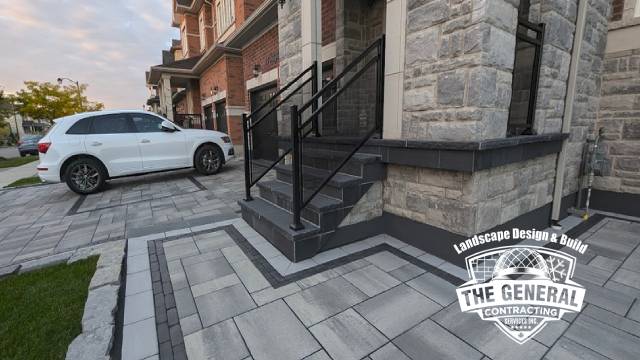
Interlocking pavers offer the most design flexibility. Homeowners can choose colours, textures, borders, patterns, and accents that complement the house. This can be especially valuable when the driveway is a major part of the front yard.
Asphalt has a clean and simple look, while concrete can range from plain to decorative. The best appearance depends on the style of the home and the surrounding landscape. Driveway material should connect visually to walkways, steps, retaining walls, and planting beds.
Review Repair and Maintenance Needs
One advantage of interlocking is that individual pavers can often be lifted, adjusted, or replaced. This is useful if settlement occurs, utility access is needed, or a small area becomes stained. Asphalt and concrete repairs can be more visible because patches may not blend into the original surface.
Every surface requires maintenance. Asphalt may need sealing, concrete can crack or stain, and interlocking needs joint care and occasional cleaning. The right choice depends partly on which type of maintenance the homeowner is most willing to manage.
Consider Toronto Freeze-Thaw Conditions
Toronto driveways face freezing, thawing, snow, salt, and heavy rain. Movement in the base or soil can affect any surface. Interlocking pavers can handle small movements because the surface is made of individual units, but the base must still be properly prepared.
Concrete can crack when movement occurs, and asphalt can soften, rut, or degrade over time. Installation quality matters for all three. A well-prepared base often matters more than the surface material alone.
Look at Drainage and Grading
Driveway drainage should move water away from the house, garage, and neighbouring properties. Interlocking, asphalt, and concrete can all be sloped properly, but the design must account for fixed elevations such as garage slabs, sidewalks, and curbs. Drainage decisions should happen before installation.
Some paver systems may support permeable design when specified and installed correctly. That is different from a standard interlocking driveway and requires the right base and outlet strategy. Homeowners should ask which drainage approach is being proposed.
Think About Long-Term Flexibility
Interlocking can be a strong choice when homeowners expect future changes. Walkway additions, border updates, repairs, and utility work may be easier to blend into a paver system. This flexibility can be useful for properties that may add lighting, landscaping, or front-yard improvements later.
Asphalt and concrete can still be practical choices, especially when budget or simplicity is the top priority. The key is matching the material to the homeowner's plans. A surface that fits today's budget but conflicts with future work may not be the best long-term option.
Choose Based on Priorities
If the main goal is the lowest initial cost, asphalt may be attractive. If the goal is a solid, simple paved surface with a different finish, concrete may be considered. If curb appeal, repair flexibility, and design options matter most, interlocking often deserves serious attention.
The previous guide on interlock driveway cost in Toronto explains the pricing factors in more detail. Homeowners should compare installation quality, not just material labels. The best driveway is the one built properly for the property.
The The General Contracting Services Inc. Invitation
The General Contracting Services Inc. can help compare an interlocking driveway vs asphalt or concrete for your Toronto property, and you can review our interlocking driveway vs asphalt or concrete profile before calling (416) 936-3335. Contact The General Contracting Services Inc. today for a free quote and a driveway plan that fits your budget, curb appeal goals, and long-term maintenance expectations.