
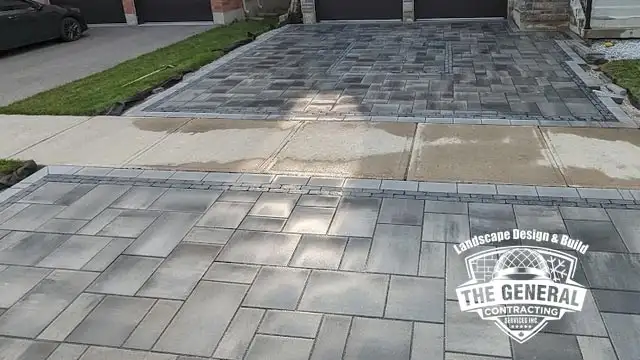
Summary: In Toronto, interlock driveways typically cost $30 to $40 per square foot, with prices shaped by size, paver choice, excavation, base prep, and drainage. Homeowners should compare quotes on full process quality, not just the lowest price.
Average Interlock Driveway Cost in Toronto
An interlock driveway is one of the most attractive upgrades a Toronto homeowner can make to the front of their property. It improves curb appeal, creates a cleaner entrance, and gives your home a more finished look than plain asphalt or aging concrete. Many homeowners start the process with one simple question: how much does an interlock driveway cost in Toronto?
For 2026, most Toronto homeowners can expect an interlock driveway to cost between $30 and $40 per square foot for a quality installation. A smaller single-car driveway may fall between $6,000 and $9,000, while a standard double-car driveway often lands between $12,000 and $18,000. Larger driveways with turnarounds, custom borders, upgraded pavers, or more complex grading can reach $24,000 to $35,000 or more.
A typical Toronto double-car driveway usually sits around 400 to 600 square feet. For many homeowners, the total investment is around $15,000 to $20,000, including excavation, base preparation, paver installation, edge restraint, polymeric sand, cleanup, and other project details.
Price is important, but it should not be the only deciding factor. An interlock driveway is only as strong as the base underneath it. A lower quote may look appealing at first. Still, a poorly prepared base can lead to sinking, shifting, drainage issues, and costly repairs later.
| Driveway Size | Typical Cost | Project Type | Cost Factors |
|---|---|---|---|
| Single car | $6,000-$9,000 | Small driveway | Basic layout |
| Double car | $12,000-$18,000 | Standard driveway | Size and base |
| Large driveway | $24,000-$35,000+ | Custom project | Design upgrades |
| Per square foot | $30-$40 | Average pricing | Materials and labour |
Why Interlock Driveway Prices Vary
No two properties are exactly alike, which is why interlock driveway pricing can vary so much from one Toronto home to another. The driveway size is the obvious starting point, but several other factors can affect the final price.
Paver selection is one of the biggest factors. Basic rectangular pavers are usually more affordable because they are easier to install and require fewer cuts. Premium pavers with richer textures, blended colors, larger formats, or specialty finishes usually cost more. Decorative borders, herringbone patterns, curved edges, inlays, and custom designs can also increase labor time.
Site conditions also matter. A flat driveway with easy equipment access will usually cost less than a sloped driveway with tight access, poor drainage, tree roots, or a failing existing base. In Toronto, many homes also have older asphalt or concrete driveways that need to be removed before the new interlock system can be installed.
Concrete removal usually costs more than asphalt removal because it is heavier, harder to break apart, and more expensive to dispose of. Old interlock may sometimes be easier to remove. However, the condition of the existing base still needs careful assessment.
Drainage is another major consideration. Water needs to move away from the home, garage, walkway, and neighboring properties. A proper interlock driveway quote should account for grading, base materials, and any drainage corrections needed before the pavers go down.
What Goes Into a Proper Interlock Driveway Installation
A quality interlock driveway is not just a layer of pavers placed over the ground. The long-term performance comes from the excavation, base preparation, compaction, drainage, and finishing details.
The process usually begins with removing the existing driveway material. Once the surface is removed, the contractor excavates to the appropriate depth based on soil type, intended use, and local conditions. Driveways need a stronger base than patios or walkways because they carry vehicle weight every day.
After excavation, geotextile fabric may be installed to help separate the native soil from the aggregate base. Clear stone or a similar base material is then added in layers and compacted carefully. Compaction matters because loose or uneven base material can settle after vehicles begin using the driveway.
A bedding layer is installed above the compacted base to allow the pavers to be placed evenly. The pavers are then laid in the selected pattern, cut where needed, and secured with edge restraint. Polymeric sand is swept into the joints, activated, and allowed to set.
A proper installation should leave the driveway looking clean, even, and solid. More importantly, it should be built to withstand Toronto weather, daily vehicle use, and seasonal freeze-thaw cycles.
Toronto Climate and Why Base Preparation Matters
Toronto weather is hard on driveways. Cold winters, spring thawing, heavy rain, road salt, and changing temperatures can all affect outdoor surfaces. An interlock driveway can perform very well in this climate, but only when it is installed with the right base and drainage.
Freeze-and-thaw movement occurs when moisture enters the ground and expands during freezing temperatures. A weak base or poor drainage can cause pavers to shift, heave, or settle. Over time, the surface may become uneven, creating low spots where water collects.
A properly installed interlock driveway is designed to move slightly without cracking, unlike a rigid concrete slab. Individual pavers can also be lifted and replaced if a repair is needed. Compared with poured concrete or asphalt, interlock gives homeowners more flexibility for future repairs.
Base depth is one area where cheap quotes often cut corners. A thinner base may reduce upfront costs, but it can shorten the driveway's lifespan. Strong excavation, quality aggregate, proper compaction, and correct grading all help protect the driveway from premature failure.
Toronto homeowners should ask contractors how deep they plan to excavate, what base materials they use, how compaction is handled, and how drainage will be managed. A confident contractor should be able to explain the process clearly.
Comparing Low, Mid-Range, and Premium Quotes
When homeowners collect quotes for an interlock driveway, they may see a wide range of prices. Some contractors may quote much lower than others, while premium companies may appear expensive at first glance. The difference often comes down to materials, labor, business practices, warranty, and installation standards.
Low-end quotes may come in around $20 to $24 per square foot. Pricing at that level can sometimes mean a thinner base, lower-quality pavers, limited drainage planning, rushed compaction, no proper edge restraint, or no permit support. A lower price can become expensive if the driveway begins sinking within a few years.
Mid-range quotes, often around $30 to $40 per square foot, usually reflect a more complete installation. Homeowners should expect proper excavation, quality base materials, reliable compaction, good drainage planning, edge restraint, clear project details, and a written warranty.
Premium quotes may reach $45 to $60 per square foot or more. High-end pricing may include complex designs, premium paver products, detailed project management, heated driveway systems, custom borders, lighting, retaining walls, or more involved site preparation.
The best quote is not always the cheapest one. A better approach is to compare what each contractor includes. Look at base depth, paver brand, warranty terms, drainage solutions, disposal, permits, cleanup, and communication.
Extra Features That Can Affect the Final Price
Many interlock driveway projects include more than just the driveway surface. Homeowners often use the opportunity to improve the front entrance, walkway, garden edges, lighting, or drainage at the same time.
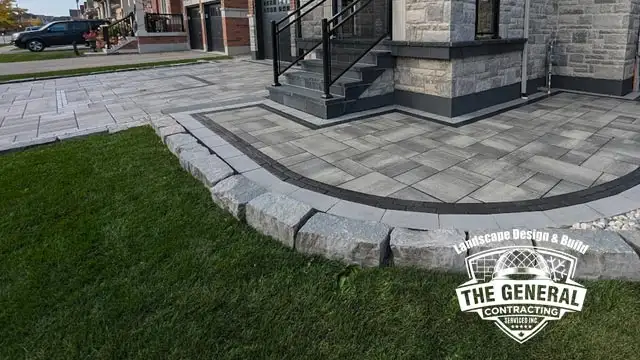
A walkway extension is a popular upgrade because it connects the driveway to the front door, creating a more cohesive design. Borders can frame the driveway and add contrast. Accent pavers can make the entrance feel more custom without changing the entire surface.
Retaining walls may be needed on sloped properties or driveways with grade changes. A wall can create a cleaner edge, support soil, and improve the overall layout. Landscape lighting is another upgrade that improves safety and curb appeal, especially near steps, walkways, and front entrances.
Some homeowners also ask about heated driveway systems. Heated systems can reduce snow and ice buildup, but they add significantly to the project's cost. They are more common on higher-end properties or steep driveways where winter traction is a concern.
Drainage upgrades can also affect the budget. Poor drainage should never be ignored because water is one of the biggest reasons driveways fail. Catch basins, grading changes, permeable paver systems, and other drainage improvements may be recommended depending on the property.
What Should Be Included in Your Interlock Driveway Quote
A professional quote for an interlock driveway should be detailed enough for the homeowner to understand exactly what is included. A vague quote with only one total price can create confusion later.
The quote should include the approximate square footage, removal of the existing driveway, disposal, excavation depth, base materials, bedding material, paver product, color, pattern, border details, edge restraint, polymeric sand, compaction, cleanup, project timeline, and warranty details.
Permits and local requirements should also be discussed. Driveway projects can involve municipal rules, especially when changing the size, layout, drainage, or access point. A responsible contractor should explain what applies to your property and help guide the process.
Homeowners should also ask about the payment structure. A fair deposit is common, but large upfront payments should be reviewed carefully. The quote should explain when payments are due and which milestones they are tied to.
Photos of past work can help you understand the contractor's quality. Reviews, references, and local project examples are also useful. A good contractor should be able to show completed driveway installations and explain how those projects were built.
Clear communication before the project starts often leads to a smoother installation. Homeowners should know what to expect, how long the project may take, and how the property will be left at the end of each day.
The prices in this guide hold across most of the GTA, though lot access and grading can shift a quote from one neighbourhood to the next. If your project is outside Toronto proper, our interlocking in North York and interlocking in Halton Hills pages cover what to expect in those areas.
The General Contracting Services Inc Invitation
The General Contracting Services Inc helps homeowners plan and build durable, attractive interlock driveway projects across Toronto and the surrounding GTA communities. If you are comparing prices, reviewing paver options, or trying to understand what a proper interlock driveway should include, our team can provide clear guidance before the work begins. Call us at (416) 936-3335 to discuss your interlock driveway project and request a quote.