
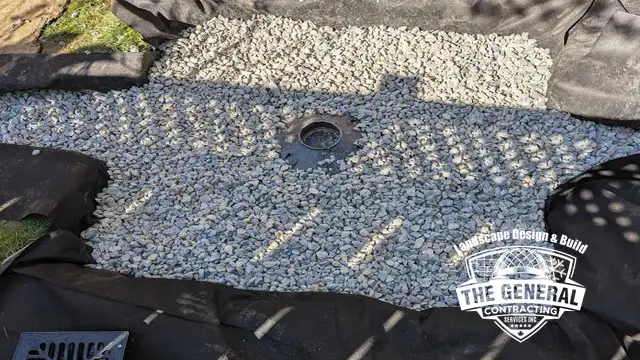
Summary: Yard drainage problems like standing water, soggy lawn, erosion, or foundation moisture require diagnosing where water comes from, how the property is graded, and where runoff can be discharged. Lasting fixes often combine grading, downspout management, surface drains, swales, or underground drainage rather than a single quick fix.
Professional yard drainage work in Toronto should address the cause of unwanted water instead of hiding one wet patch. Rainfall, roof runoff, compacted soil, neighbouring grades, hard surfaces, and blocked drainage routes can all contribute. Observing the property during or immediately after rain gives the clearest picture of how water actually moves.
Identify Where the Water Is Coming From
Start by separating surface runoff from groundwater, irrigation leaks, and plumbing problems. Water that appears only after heavy rain may be following a low route across the yard. A consistently wet area during dry weather could indicate a leaking line, natural seepage, or another source requiring different investigation.
Check roof downspouts, sump discharge points, patios, driveways, walkways, retaining walls, and slopes around the home. Note when the water appears, how long it remains, and which direction it travels. Photos taken during rainfall are useful because the yard can look completely different by the time a contractor arrives on a dry day.
Neighbouring runoff can appear to be the cause even when a low spot on the subject property is what allows water to remain. Look at the entire route rather than focusing only on the puddle. The source, travel path, collection point, and possible outlet are four separate parts of the diagnosis.
Correct Negative Grading Near the House
Soil and finished surfaces should generally encourage water to move away from the foundation rather than toward it. Over time, settlement, garden work, new paving, or raised planting beds can create low areas beside the house. Even a shallow depression can collect runoff and keep the foundation area wet.
Regrading may involve removing excess material, adding and compacting suitable soil, reshaping lawn areas, or adjusting nearby hardscape elevations. The work should preserve safe clearances at siding, vents, doors, and windows. Simply adding loose topsoil to a low spot may provide only temporary improvement if it settles or redirects water to another problem area.
Small grade changes can influence a large area, so spot corrections should be checked against the rest of the yard. Raising one depression may send water toward a patio or neighbour, while lowering an outlet can expose roots or create erosion. Elevation measurements help turn visual observations into a workable grading plan.
Manage Downspouts and Concentrated Roof Runoff
A roof collects a large amount of water and delivers it through a small number of downspouts. If an outlet ends beside the foundation or on a poorly graded lawn, it can overwhelm that area during a storm. Extensions or properly designed underground conveyance can move roof water toward a suitable discharge point.
Connections must remain accessible for cleaning and should not create a winter tripping hazard or an outlet that freezes against a walkway. Downspouts should not be directed toward neighbouring properties. The best route depends on municipal requirements, available slope, soil conditions, and the layout of the lot.
Use Swales and Surface Grading for Broad Runoff
A swale is a shallow, shaped channel that guides water across the landscape. It can be covered with lawn or integrated into planting when there is enough room and fall. Because it manages water at the surface, a swale is often easier to inspect and maintain than a buried system.
The shape should be gentle enough for safe walking and lawn maintenance while still providing a continuous route. A swale that stops at another low point merely relocates the puddle. Its outlet must be planned carefully so runoff does not damage a sidewalk, driveway, garden, or adjacent property.
Add Drains Only Where They Have a Useful Outlet
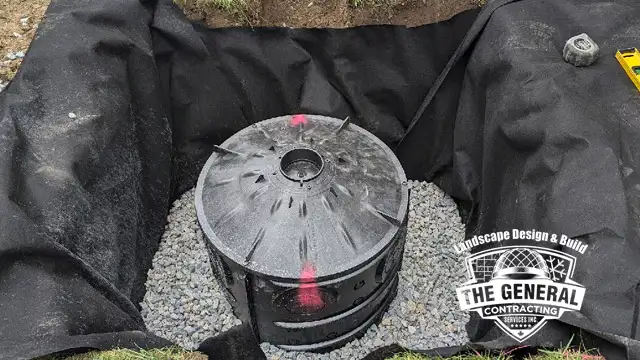
Catch basins, channel drains, French drains, and solid conveyance pipes solve different problems. A catch basin can collect surface water at a low point, while a channel drain may intercept runoff crossing a paved entrance. A French drain is intended to manage water within the soil, not act as a universal answer for every puddle.
Every drain needs a destination and enough elevation difference to function. Installing pipe without confirming slope and discharge can create a buried container that fills with sediment or stagnant water. Cleanouts, filter fabric, aggregate, pipe type, and access for maintenance should be considered before trenches are closed.
Perforated and solid pipes are not interchangeable. Perforated pipe is used where water needs to enter or leave along a trench, while solid pipe conveys collected water without intentionally releasing it on the way. Choosing the wrong type can saturate soil beside a structure or fail to collect the water causing the problem.
| Drain Type | Purpose |
|---|---|
| Catch basin | Collects surface water at a low point |
| Channel drain | Intercepts runoff crossing a paved entrance |
| French drain | Manages water within the soil |
| Perforated pipe | Lets water enter or leave along trench |
| Solid pipe | Conveys collected water without releasing it |
Coordinate Drainage With Interlocking and Retaining Walls
Hardscape changes how water moves because pavers, walls, steps, and driveways reshape the property. New work should maintain positive drainage and avoid trapping water against structures. Base materials and wall drainage details also need to handle water without washing out or remaining saturated.
When multiple exterior projects are planned, drainage should be designed first or at the same time. The company's guide to planning a Toronto landscaping budget explains why grading, drainage, and major hardscape usually belong early in the project sequence. Coordinated work reduces the risk of removing finished landscaping to correct a problem later.
Know When a Professional Assessment Is Needed
Professional help is especially valuable when water collects near the foundation, enters the house, crosses property lines, erodes a slope, or keeps returning after basic corrections. A contractor can measure elevations, review surface routes, inspect existing drains, and determine whether the issue is isolated or part of a larger grading problem.
A useful proposal should identify the suspected cause, intended drainage route, materials, restoration work, and maintenance needs. Be cautious of a one-size-fits-all recommendation made without observing site elevations or discussing the outlet. Drainage systems work as connected paths, so each inlet, pipe, slope, and discharge point has to support the same plan.
Homeowners should also ask what the yard will look like after installation. Trenching can disturb lawn, garden beds, irrigation lines, and hardscape edges, so restoration belongs in the scope. Clear expectations for sod, seed, soil, paver reinstatement, and settlement follow-up help prevent a functional repair from leaving unfinished exterior work.
Drainage problems rarely respect city limits, and neither do we. The General Contracting Services Inc. handles grading and drainage projects across the west GTA. See our locations page for every community we serve.
The General Contracting Services Inc. Invitation
Choose The General Contracting Services Inc. For professional yard drainage help across Toronto, call (416) 936-3335 and contact us today for a free quote and a plan built around your property's grading, runoff, and outdoor features.